Portovenere
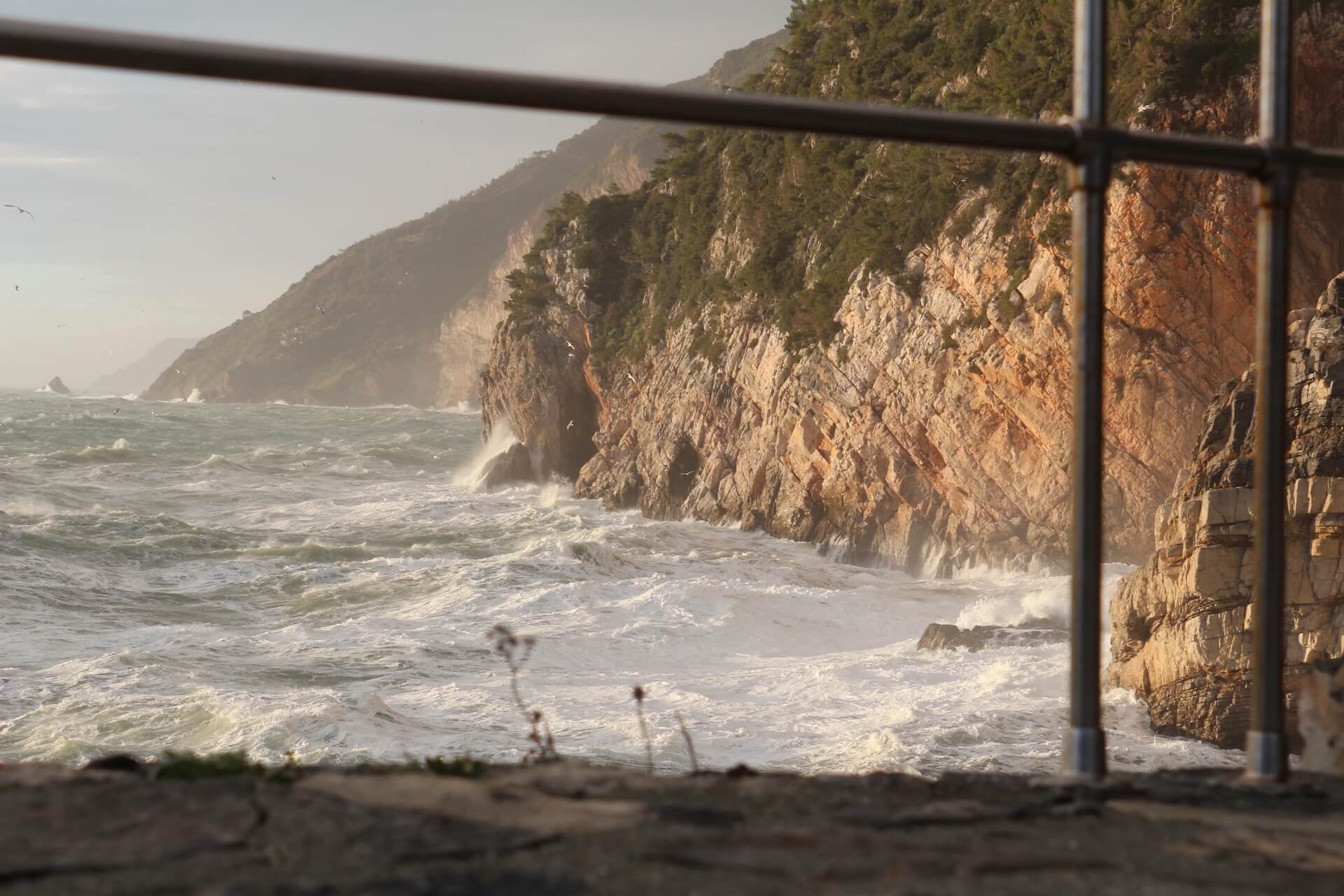
An absolutely unique location: the view opens onto the Gulf of Poets and its islands on one side, and the inlets in the stretch of coast leading to Cinque Terre on the other.
Placed on the westernmost edge of the Gulf of La Spezia, facing the islands of Palmaria, Tino and Tinetto, is Portovenere, one of the most charming seaside towns in Liguria. In addition to the aforementioned islands, the territory of Portovenere also includes the maritime villages of Le Grazie and Fezzano.
The ancient ‘Portus Veneris’ was a small Roman port between Luni and Sestri Levante. This early urban settlement has left barely any trace, but we know that its centre, the ‘Castrum Vetus’, occupied the area next to the church of St. Pietro. The maritime routes of Emperor Antoninus Pius (161 AD) confirm that Portovenere existed as a maritime centre during the Roman period, and was a ‘portus’ (harbour) whose inhabitants occupied the area of St. Pietro, now known as Piazza L. Spallanzani.
The Genoese surrounded the town with a 12th century defence system, whose impact on the town and its layout are still clearly visible: tower-houses arranged in rows were built along the shore, while a boundary wall, guarded by fortified towers, reached up to the castle.
Entry into the village is through a Romanesque door, which bears the inscription ‘Colonia Ianuensis 1113’; in its inner part is a 15th century fresco depicting the ‘White Madonna’, the town’s patron saint.
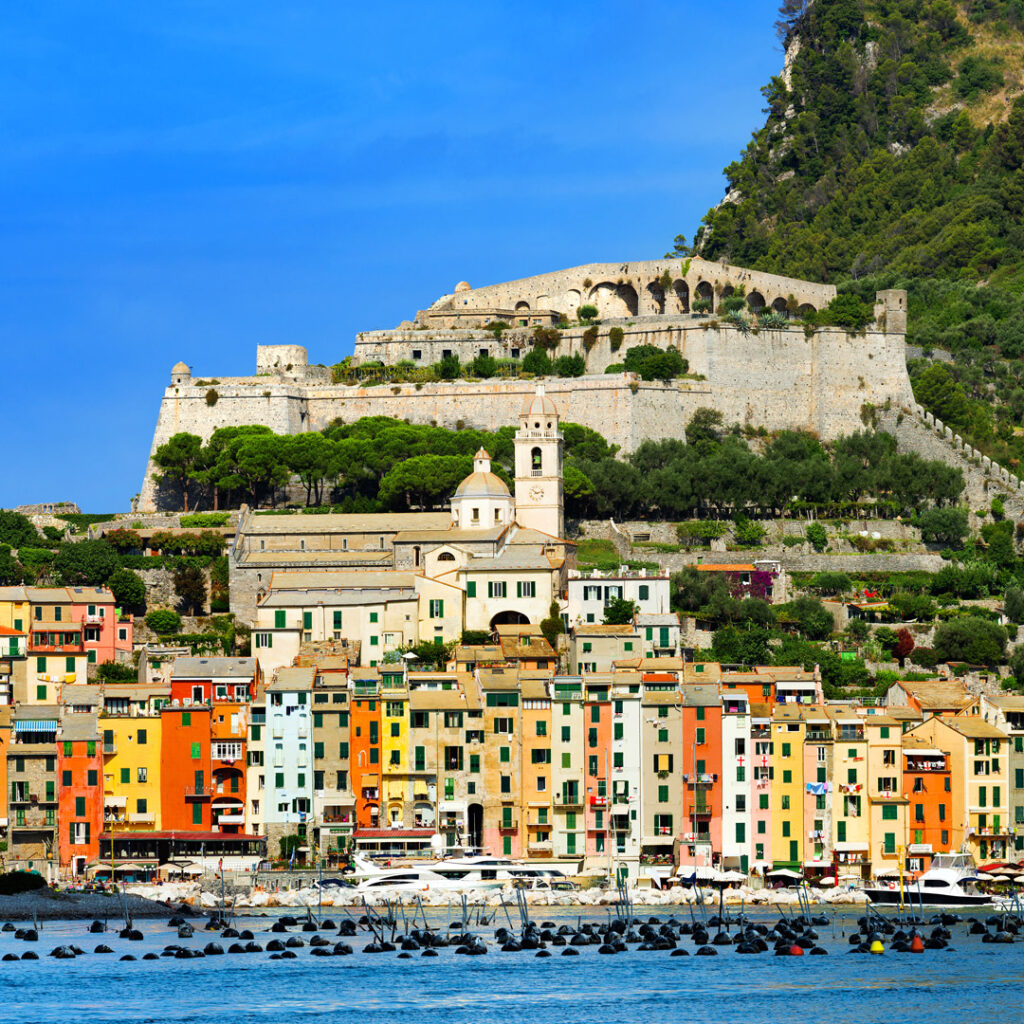
The houses overlooking the harbour are tall and narrow, with brightly coloured façades. The houses have two entrances, one facing the beach for boats and one facing the internal road, the alleyway that runs parallel to the coast but at a higher elevation. At the end of the main alleyway, you find yourself in a square where, at the top of a staircase, stands the church dedicated to St. Peter.
The church of St. Pietro, built on a rock overlooking the sea, is placed in an exceptional location: from here, the view opens onto the Gulf of Poets and islands on one side, and the coves that lead to the Cinque Terre on the other.
In 1256, the Genoese decided to build the church on the ruins of a pre-existing early Christian temple. The construction is in Romanesque/Gothic Ligurian style, with typical black and white stripes. The older chapel and presbytery structure are preserved within the sacred building.
Below the church is a very evocative corner: the Arpaia cave, also known as Byron’s cave, which used to be the poet’s favourite location due to the clear and luminous colour of the sea.
Overlooking the town is Doria Castle, built by the Genoese in 1161, currently used as a venue for exhibitions and cultural events.